
- The dialysis center RO device must be of the medical hemodialysis RO type and online. Its outlet water must be in accordance with ISO 13959:2014 or ISO 23500:2019 or AAMI standards and tested for chemical, physical, microbial and pyrogenicity (endotoxin). The list of tests is given in the table below.
List of required water tests for dialysis units
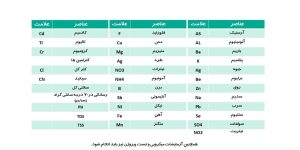
- The volume of water required for each hemodialysis machine should be considered 50 liters per hour. Also, a storage tank for the water entering the pre-treatment system and the RO device should be considered for emergencies (water cut-off). The volume of this tank should be at least twice the total consumption of the dialysis machines in one work shift (about 5 hours). Also, the tank should be capable of periodic cleaning.
- The entire loop of RO water (return) in the dialysis section must have a minimum of connections and be made of stainless steel with angles of at least 135 degrees.
- The valve and all connections for the purified water outlet (RO) to the dialysis machine must be made of stainless steel with an internal diameter of 3/8 inch. This valve must be a gas valve type and be placed vertically (downward). It is better to consider a horizontal distance of 15 cm from the right side to the dialysis machine for the installation location of this valve. A stainless steel dialysis water sampling valve should be provided in this path.
- The pressure of RO water entering the hemodialysis machine should be between 2 bar and 4 bar. The temperature of this water entering the hemodialysis machine should be between 15 and 25 degrees Celsius.
- The inlet and outlet hoses that must be provided by that esteemed center for hemodialysis machines must be opaque, medical-grade, of two different colors, and capable of withstanding a pressure of at least 10 bars to prevent bacterial growth. The inner diameter of each inlet and outlet hose must be 3/8 inch and the length of each hose must be 2.5 meters.
- The height of the purified water (RO) inlet pipe to the hemodialysis machine should be 50 to 70 centimeters above ground level.
- The height of the dialysis sewage outlet should be between 20 and 40 cm from the ground and should also be lower than the dialysis filter outlet. The dialysis sewage outlet should be 2 inches in diameter. The inlet of this outlet should be covered by a plastic cap with a hole the size of the dialysis outlet hose in the middle of the cap so that the outlet hose enters vertically and does not come into contact with the body of the sewage outlet. There should be at least 10 cm of air space between the end of the dialysis machine’s sewage outlet hose and the dialysis sewage path.
- The floor of the dialysis section and the RO room must be acid-resistant and disinfectable. The walls of the dialysis section must also be disinfectable. There must be a slight slope on the dialysis section surface towards the floor scrubber drains. The surface of the dialysis section must not be slippery. The floor scrubbers of the dialysis section must have covers.
- Wastewater from dialysis machines, wastewater from dialysis ward floor washers, and wastewater from dialysis ward sinks must be separate from each other.
- The space required for each dialysis machine and dialysis bed (or chair) should be at least 2.70 x 2.70 square meters and, when necessary, separated from the adjacent bed and machine by a curtain or screen. A pedestal-free washbasin should be installed between every dialysis bed/chair. The width of the dialysis ward corridor should be at least 1.25 meters.
- The location of hemodialysis machines should be suitable in terms of humidity, temperature and ventilation. The air temperature should be in the range of 22 to 24 degrees Celsius and the relative humidity of the air should be in the range of 30% to 60%. It is necessary to install a temperature and humidity meter in the dialysis section to control the aforementioned parameters.
- The air in the dialysis unit should be changed at least 6 times per hour, with at least 4 of these being replaced with fresh air.
- The dialysis section pressure should be positive. The isolation room pressure should be negative.
- For each dialysis machine and bed, there should be 4 16-amp electrical outlets with a protective ground connection (pin), each of which should be installed at a height of 120 to 150 centimeters from the ground. If a dialysis chair is used, this height should be 140 to 160 centimeters from the ground. In addition, for essential cases, two emergency electrical outlets should be installed for each dialysis machine and bed. A 16-amp automatic fuse should be considered for each of the installed outlets. The input voltage for the dialysis machine should be 230 volts alternating current with a frequency of 50 Hz.
- A UPS (zero second) device should be used to prevent damage to electrical and electronic components from power fluctuations and power supply to dialysis machines during power outages. Otherwise, for centers that do not have power outages and do not have the possibility of providing a UPS, they should at least use a stabilizer with an automatic bypass system with the necessary electrical power. However, if one of the aforementioned devices is not installed, even during the warranty period, all possible damage resulting from the failure to use an appropriate power supply system is the responsibility of that center. If an emergency power generator is used during a power outage, a stabilizer with an appropriate capacity should also be used to prevent damage to the patient and dialysis machine components. It should be explained that the electrical power required for the UPS device or stabilizer required for each dialysis machine should be at least 2500 watts or 2.7 KVA.
- A suitable protective earthing system must be available or provided. There must be no voltage on the protective earthing system at any time. The total resistance from the protective earthing pin of the dialysis unit sockets to the electrical well must be less than 2 ohms. The protective earthing must be capable of carrying electrical currents in excess of 100 amps. A copy of the latest test report must also be sent to this company.
- The location of all devices must be level.